thomasoneil.com
All photos on thomasoneil.com 2026
Enter a year 1998-2026.
Some pages contain images from more than one year and the descriptions may refer to other years, but displayed here are only the photos taken in 2026.


Macro images of succulents, Winter 2025 - Macro images of succulents, Winter 2025.
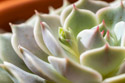
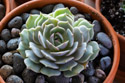
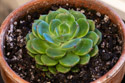
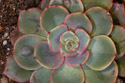
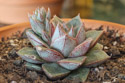
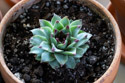
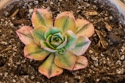
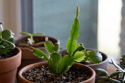
Echeveria Lola with a little flower bud forming.  In less than a week with sunlight and grow lights, the color has become less green and more pastel.
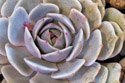
Echeveria Lola, more than a month after the previous image, perhaps the plant realized it was winter and allowed the flower bud to fade away.
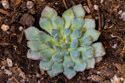
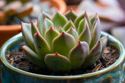
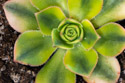
Back to the beginning, Echeveria Lola fresh from the store, still green.
My first Echeveria, Elfstone.
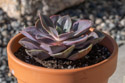
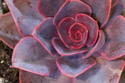
Echeveria Red Sky.
Echeveria Red Sky.
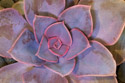
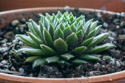
Echeveria Perle von Nurnberg, perhaps the most popular Echeveria variety.
Echeveria Neon Breakers.
Echeveria Cubic Frost.
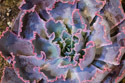
Echeveria Raindrops is a colorful variety that develops bumps on the leaves that look like...raindrops. A couple of bumps are visible, but this is another plant that had a bad shipping experience and needs some time to recover.
Echeveria Raindrops, about a month after the previous image, well on the road to recovery from shipping stress.
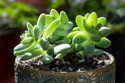
Echeveria Setosa Var. Deminuta, blue leaves with tufts of hair at the tips.
This doesn t look like my other Echeverias but it is a variety called Lilac Mist.
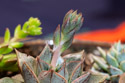
Echeveria Purpusorum with a flower (?) stalk.
A different Echeveria Purpusorum, like the one in the previous image also has a stalk, but shorter.
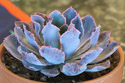
A generic Echeveria from Trader Joe s.
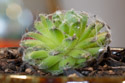
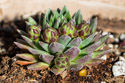
Sempervivum, unknown variety but probably an Arachnoideum.  (#1 of six unknown varieties of Sempervivum in Jan. 29 shipment.)  Lost in the February freeze.
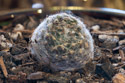
A loose ball from my Jan. 29 Sempervivum shipment, unknown variety but probably an Arachnoideum.  Not sure if the ball is alive, but it is being given every opportunity.  The image is an example of focus bracketing, 20 stacked images.  (#1 of six unknown varieties of Sempervivum.)
Sempervivum Arachnoideum came back to life.  It was a dry little ball six weeks earlier.
Sempervivum, unknown variety, lost in the February freeze.  (#2 of six unknown varieties of Sempervivum in Jan. 29 shipment.)
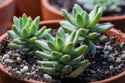
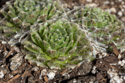
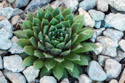
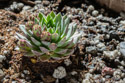
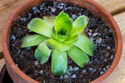
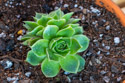
Sempervivum, unknown variety.  A perfect green little rosette but no distinguishing features such as offsets.  Survived the February freeze.  (#3 of six unknown varieties of Sempervivum in Jan. 29 shipment.)
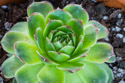
Sempervivum, unknown variety.  (#3 of six unknown varieties of Sempervivum in Jan. 29 shipment.)
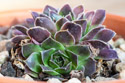
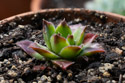
Sempervivum, unknown variety, purple-tipped leaves.  (#4 of six unknown varieties of Sempervivum in Jan. 29 shipment.)
Sempervivum, unknown variety, purple leaves, small rosette growing out the side of the main one.  (#5 of six unknown varieties of Sempervivum in Jan. 29 shipment.)
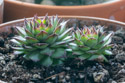
Sempervivum, unknown variety, two rosettes with purple-tipped leaves.  (#6 of six unknown varieties of Sempervivum in Jan. 29 shipment.)
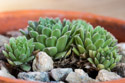
Sempervivum Globiferum Budai Mountains.  The Globiferum species offsets (chicks) are small globes that fall off the mother plant (hen) and roll away to root.  One of the fallen offsets can be seen in the lower right corner, and there are five still attached to the hen.  Thankfully survived the February freeze.
Sempervivum Globiferum Budai Mountains.  Five offsets are still attached to the mother plant.
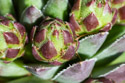
Sempervivum Globiferum Budai Mountains, closeup of one of the offsets.
Sempervivum Heuffelii Cherry Glow, had a tough life, damaged in transit with several lost and broken leaves, then froze soon after this image was taken.
Sempervivum Heuffelii Coral Reef.  Mostly green with red tips, if it had survived the February freeze the spring and summer sun would have brought out more dramatic colors.
Sempervivum Heuffelii Orion.  If it had survived the February freeze, it would have developed red and purple color with increased light, with silvery cilia on the leaves giving the plant a frosted appearance.  The one I received was two rosettes back-to-back.
Sempervivum Strawberry Kiwi of the Chick Charms line.
Mammillaria Elegans Cactus.
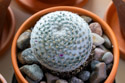
Mammillaria Powder Puff Cactus.
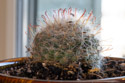
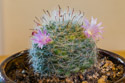
Mammillaria Powder Puff Cactus seems a little taller than the previous image six weeks ago and has started to flower.
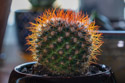
Mammillaria rhodantha cactus, the Rainbow Pincushion.
Jade (Crassula ovata).
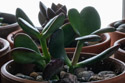
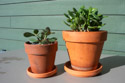
My little Jade (Crassula ovata) gets a big brother.
Related to Jade, a Crassula rupestris "String of Buttons."
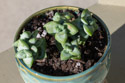
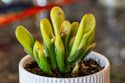
This was in bowl of unidentified plants from Home Depot, but it is obvious it is a Crassula Ogre Ears.  The top of this one and others in the store were very yellow and it is only gradually getting green.
Sedeveria Blue Burrito.
Graptosedum California Sunset is a hybrid of Graptopetalum and Sedum. Its pink coloration is most vibrant when under stress (bright sunlight, infrequent watering, cool temperatures). In spring it will have clusters of white, star-shaped blossoms.
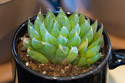
Haworthia fasciata Zebra Plant, which can thrive in relatively-low light.
Hawortha attentuata Concolor.
Haworthia limifolia Fairy Washboard.
Haworthia cooperi, translucent, jelly-like leaves.
Pachyphytum compactum Little Jewel.
Pachyphytum oviferum Pink Moonstone.
Graptopetalum paraguayense Ghost Plant will show a wide range of pastel tones as it matures.
Graptoveria Lovely Rose sustained damage in shipment but probably will survive.
Aeonium Florens, my first and so-far only Aeonium, very green after unboxing.
Aeonium Florens, starting to show some color after two weeks getting sun.
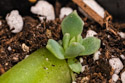
Succulent sprouting from a leaf, not sure of the variety.
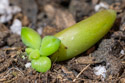
Succulent sprouting from a leaf.  I found this among the Cocoon Plants, but the color is wrong since those all all fuzzy white.
Thanksgiving Cactus.
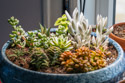
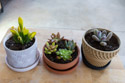
One of my first attempts at making a succulent bowl.  Clockwise from right, the white Senecio haworthii Cocoon Plant, Sedum Shooting Stars, Crassula String of Buttons (variegated), a random rosemary, Oscularia deltoides (one of several unrelated varieties commonly known as Ice Plant), a pup from the Haworthia limifolia Fairy Washboard, a Cuban Oregano which has since been relocated, and at center one rosette from the pot of four Echeveria Lilac Mist.
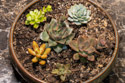
Another succulent bowl, this one in an eight-inch Bonsai.  All of these plants are nameless except the fabulous Echeveria Purpusorum at center.  These all might be Echeverias except the probable Sedum at lower left.
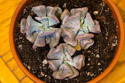
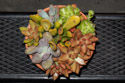
This cheap ($6) terra cotta pot was a bargain at Home Depot.  It contains nine plants of six varieties.  I planted some in other bowls, gave two their own container, and put four back into this pot.  My best guess clockwise starting at upper right is Echeveria, Sedum, Pachyphytum, Sedeveria, Graptopetalum, and a Crassula in the middle.  The Crassula certainly is an Ogre Ears; the others I m maybe 50% right.
From the Home Depot pot with nine plants, the Crassula Ogre Ears and what I m assuming is a Pachyphytum flank the four plants that went back in the bowl.  The other three from this haul went to other bowls.

[Blog entries for 2026]

Top Menu | Destinations | Years | Species | Aircraft, etc. | Blog | Contact Info

All photos ©1998 - 2026 by Thomas O'Neil